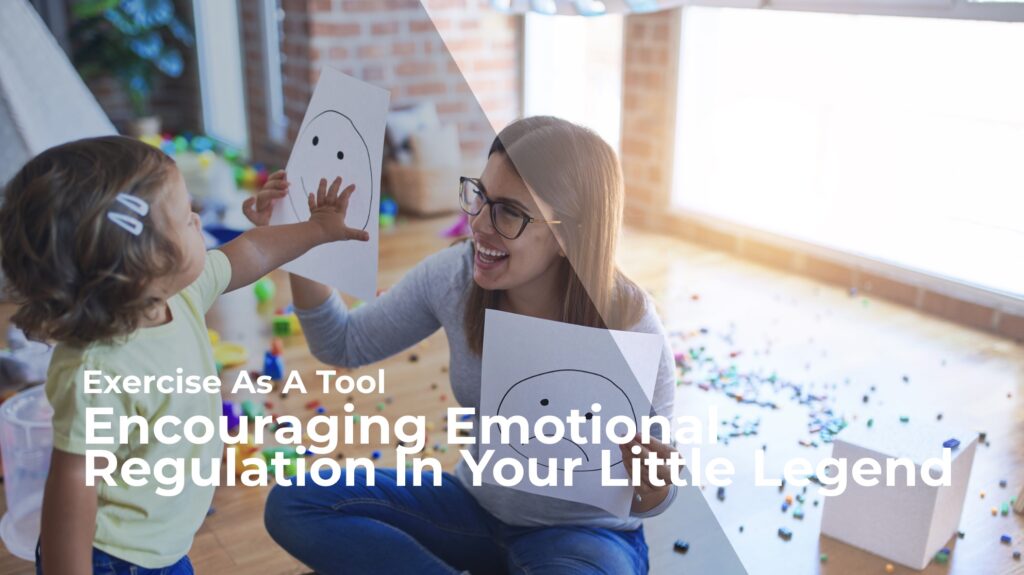
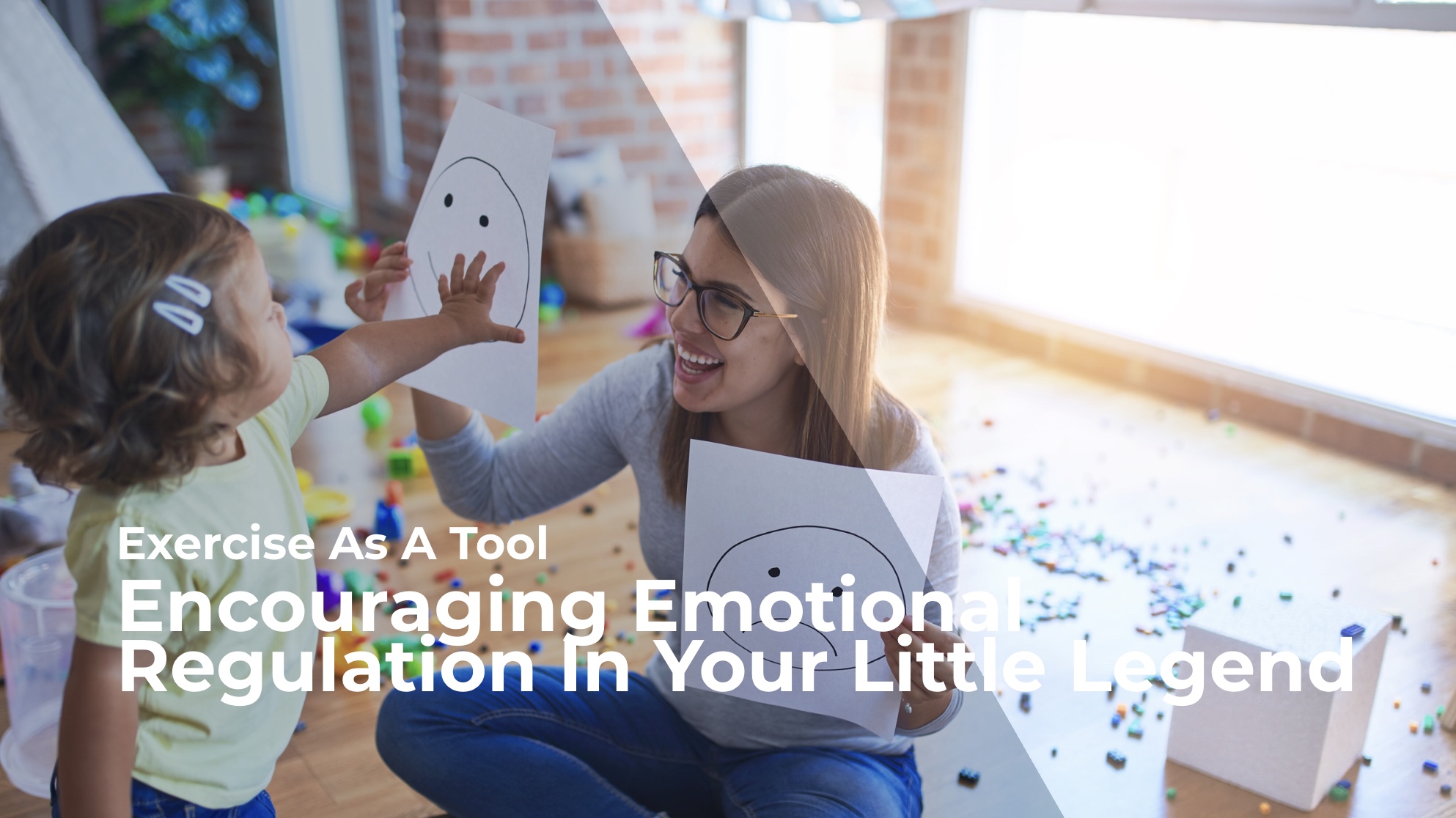
Emotional regulation: is your little legend’s ability to recognise, manage, and respond to emotions – and it is a skill children are still learning well into adolescence. Big feelings, quick reactions, and emotional “outbursts” are not a sign of bad behaviour; they are often a sign that a child’s brain and body need support.
One of the most powerful (and often overlooked) tools for supporting emotional regulation in children is movement!
The Brain–Body Connection
Our Little Legend’s regulate their emotions through both the brain and the body. When the body is dysregulated (think restless, overloaded, under-stimulated, or fatigued) – their emotions are much harder to manage.
Exercise helps regulate emotions by working on three key systems:
- Releasing “happy hormones”
- Activating the prefrontal cortex
- Regulating the nervous system
Let’s break this down.
- Exercise Releases “Happy Hormones”
Movement naturally increases the release of key neurotransmitters and hormones that support emotional wellbeing.- Endorphins
- Reduce stress and discomfort
- Improve mood
- Create a sense of calm after movement
- Dopamine
- Supports motivation and reward
- Helps children feel successful and engaged
- Plays a key role in focus and attention
- Serotonin
- Regulates mood, sleep, and emotional stability
- Helps reduce anxiety and irritability
- Endorphins
- For children who struggle with emotional ups and downs, these chemical changes can make a noticeable difference in how they cope with everyday challenges.
- Movement Activates the Prefrontal Cortex.
The prefrontal cortex is the part of the brain responsible for:
- Impulse control
- Decision-making
- Emotional regulation
- Problem-solving
- Attention and focus
- This area of the brain is still developing throughout childhood and adolescence, which is why children often react emotionally before they can think things through.
- Certain types of movement help target the prefrontal cortex by requiring:
- Coordination
- Balance
- Planning
- Timing
- Following instructions
- Activities like obstacle courses, balance challenges, strength circuits, and movement games that require thinking and sequencing all encourage the brain to practice the same process needed for emotional regulation.
- Exercise Helps Regulate the Nervous System
Many children who struggle with emotional regulation are actually experiencing nervous system dysregulation.
They may be:- Overstimulated and reactive
- Under-stimulated and disengaged
- Struggling to transition between tasks
- Exercise provides controlled sensory input, helping the nervous system find balance.
- Activities that involve pushing, pulling, lifting, or supporting body weight provide proprioceptive input in the form of predictable deep pressure feedback that is naturally calming for the nervous system.
- This type of input helps children:
- Feel more grounded in their bodies
- Reduce emotional reactivity
- Improve body awareness and self-control
It is important to note that NOT ALL movements support emotional regulation in the same way. Highly competitive, chaotic, or overstimulating environments can sometimes increase emotional dysregulation, especially for children who already struggle with impulse control or anxiety.
Movement as a Skill, Not a Behaviour Fix
Exercise is not about “burning off energy” or correcting behaviour.
Instead, movement helps children:
- Build the brain pathways needed for self-regulation
- Learn how different activities make their body feel
- Develop strategies to calm or energise themselves
Over time, children begin to recognise when they move their body in certain ways, they feel calmer, happier, and more in control. That awareness is a powerful life skill.