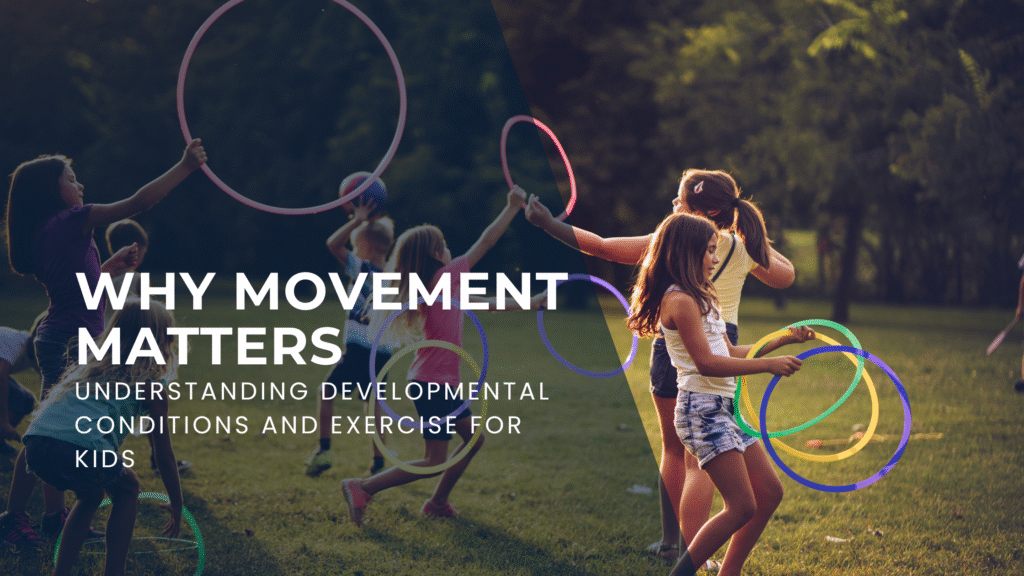
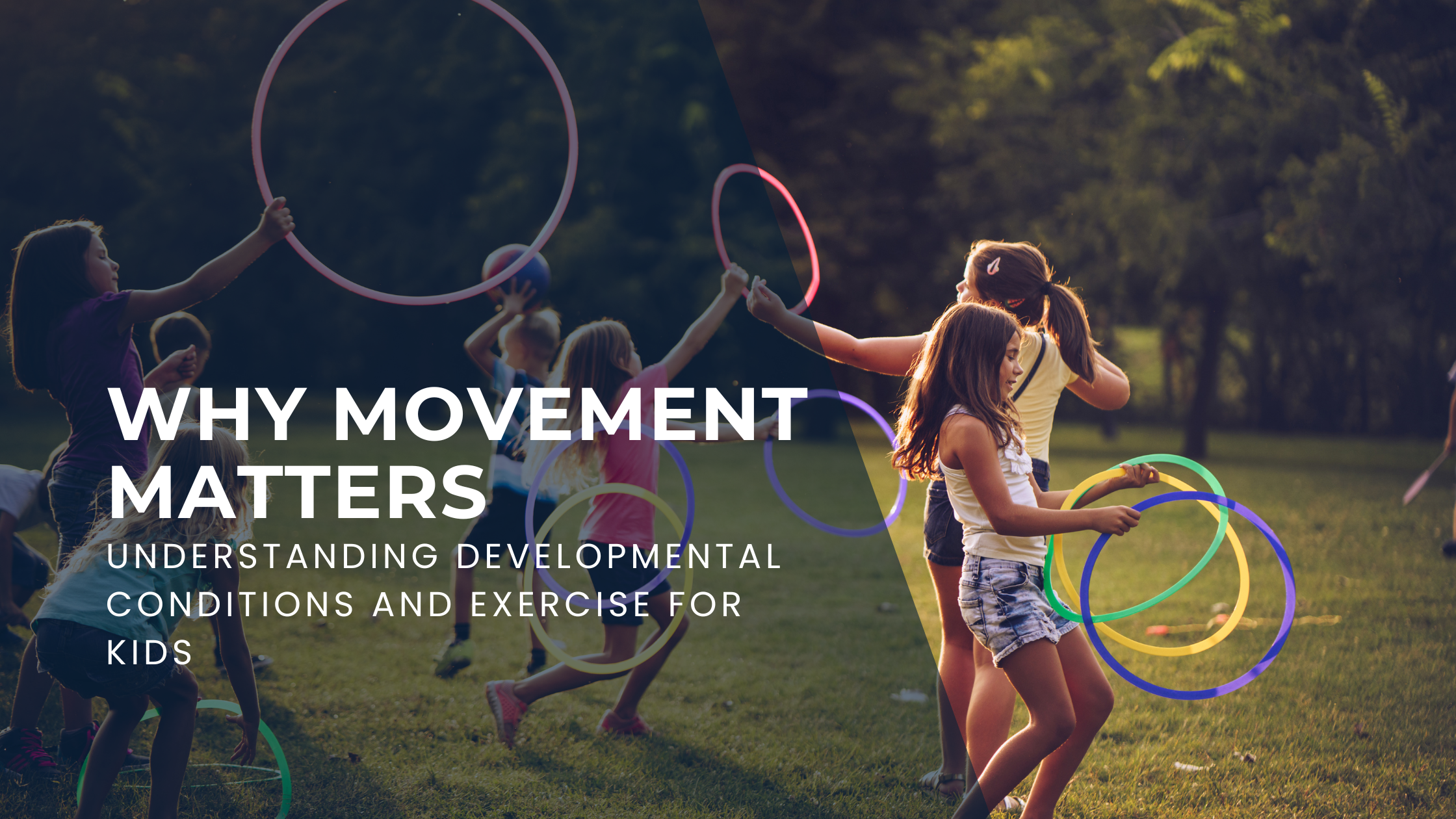
Movement is more than just play — it’s a powerful part of how children grow, learn, and feel confident in their bodies. For kids with developmental conditions, exercise is even more important. It helps them build strength, improve coordination, connect socially, and gain independence.
In this post, we’ll explore why movement matters, how exercise supports development, and how programs like Little Legends are helping all kids move, play, and thrive — regardless of ability.
Why Exercise Is Essential for All Kids
Exercise supports every part of development — not just the physical. It crosses over into all 5 domains of childhood development; physical, cognitive, social/emotional, sensory, and language and communication.
Benefits of Regular Movement:
- Builds strong bones and muscles
- Supports heart and lung health
- Improves balance, coordination, and motor skills
- Enhances brain development, memory, and focus
- Boosts mood and emotional regulation
- Encourages independence and functionality
- Promotes better sleep and energy
- Builds self-esteem and confidence
- Supports healthy weight and habits for life
Exercise Guidelines by Age
Toddlers & Preschoolers (1–5 years)
- At least 3 hours of physical activity spread throughout the day
- At least 1 hour should be more structured or intentional
- Play ideas: ball games, chasing bubbles, dancing, obstacle play
- Use stories, music, and imagination to keep it fun and age-appropriate
- Outdoor play helps with sensory development
Children (5–12 years)
- At least 60 minutes of structured activity daily, with additional movement encouraged
- Focus on moderate to vigorous intensity (gets their heart rate up!)
- Activities should support school readiness, independence, and body control
Motor Skills, Development, and Learning — Why It Matters
Understanding how kids move and learn helps us structure sessions that are fun, safe, and effective. Here’s the breakdown:
What’s the Difference?
- Motor Skills – The movements kids learn to do specific tasks (like catching a ball or writing)
- Fine motor skills = small, precise movements
- Gross motor skills = bigger, whole-body actions
- Motor Development – The stages of how those skills emerge as children grow
- Reflexes → Fundamental skills → Sport-specific skills
- Motor Learning – Stages of how kids best learn and refine new movements
- Cognitive Stage: Learning what to do with conscious effort
- Associative Stage: Refining skills with practice
- Autonomous Stage: Performing movements automatically
- Cognitive stage → Associative stage → Autonomous stage
Why It Matters
Understanding where a child is developmentally helps us:
- Design developmentally age-appropriate sessions
- Use the best teaching methods (e.g. visuals, games, repetition)
- Build success, confidence, and independence through every activity
Why Exercise Matters Even More for Children with Developmental Conditions
Developmental conditions affect how children move, learn, and interact. Common examples include:
- Cerebral Palsy – Affects muscle tone and coordination
- Down Syndrome – Involves low tone and joint hypermobility
- Autism Spectrum Disorder (ASD) – Can affect motor planning and sensory integration
- ADHD – Challenges with attention and self-regulation
- DCD – Difficulty with motor planning and coordination
Spina Bifida – Impacts mobility and sensation - Fragile X, Global Delay, Sensory Processing, Hypotonia, Intellectual Disability – All may impact how a child moves, learns, or responds to their environment
Risks of No Exercise
Children with developmental conditions are at higher risk of:
- Poor fitness and energy
- Delayed motor milestones
- Low bone density and fracture risk
- Low muscle tone
- Overweight or obesity
- Low confidence and social withdrawal
That’s why movement isn’t just helpful — it’s essential.
Exercise & Therapy Considerations for Kids with Delays
When planning sessions, we:
- Focus on functional skills (e.g. sitting, walking, reaching)
- Start with stability and progress to our strength or coordination
- Use games to improve balance, body awareness, and planning
- Keep instructions clear, short, and visual
- Match activities to sensory needs (calming or stimulating)
- Make exercises meaningful and fun (e.g. sit-to-stand → superhero squats!)
- Organise sessions to prevent and manage fatigue
- Collaborate with allied health professionals for the best support
Making Movement Fun
At You Move Health & Rehab, we know movement has to be fun to stick. That’s why our sessions are:
- Game-based and play-driven
- Interest-led (dinosaurs, dancing, Roblox, Minecraft… we use it all!)
- Designed to build confidence and make kids feel successful
- Focused on joy, not just reps
When kids have fun moving, they:
- Feel good in their bodies
- Build a positive association with exercise
- Stay active for life
How We Help: The Role of Exercise Physiologists
Exercise Physiologists are trained to design safe, tailored exercise programs that support kids of all abilities to improve their motor skills and other personal goals. Whether your child is working on balance, posture, strength, or confidence — we’re here to help them move better, feel better, and have fun doing it.
 Are you ready for your child to move and feel better? Book an initial assessment and get a tailored plan to support their long-term wellbeing.